We’re Through Being Cool: techbros, manosphere influencers, Ancient Greek masculinity, and AI
From Jordan Peterson to Andrew Tate, today’s techbros and manosphere influencers are either entirely unconcerned with being cool or, like Elon, exceptionally bad at it. Far from the poster-king Dril, whose ironically-detatched shitposts ruled the platform Elon killed, these influencers seem way more invested in the vehement avoidance of feminization than they are in being hip or avant-garde. Peterson’s infamous all-beef diet takes the stereotype that vegetables are feminine and beef is, above all the meats, the quintessentially masculine food to its most absurd extreme: if eating vegetables is girly, then real men should abstain. In summer 2025, right-wing influencers Matt Walsh and Alexander Augustine posted that for a man to have any concern at all with matters of style or artistry was “gay”:
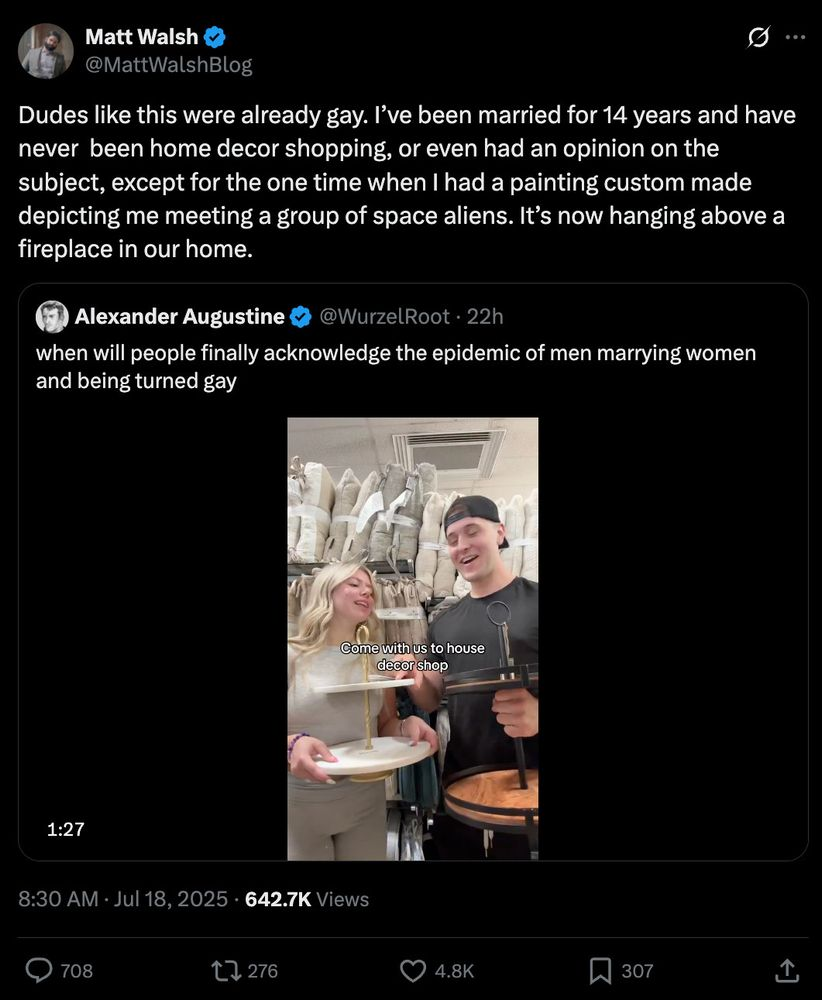
Augustine’s post presents a man in a nominally heterosexual marriage as being “turned gay” by joining his wife in implicitly feminine pursuits like “home decor shopping.” White masculine cool traditionally appropriated stereotypically feminine traits like emotional sensitivity (Lauren Goodlad called post-punk the purview of “men who feel and cry”) or big hair and makeup (think New York Dolls, Bowie, 80s hair metal) and made them signs of elite masculinity qua transgression, rebellion, innovation, and the like. In this exchange between Augustine and Walsh, however, femininity is something to be rejected, not appropriated, to the point that it’s not having sex with women that makes a guy straight or “gay,” but his ability to dominate or be dominated by either feminine inclinations like shopping or interior design or women themelves/one’s wife. Walsh and Augustine focus on the appearance of mastery and avoiding any whiff of either femininity or subordination (which are effectively the same to them), as though Walsh’s bad taste in art (a painting of him meeting extraterrestrials) laudable because it shows his fortitude against anything so feminine as a refined sense of aesthetic judgment.
It is perhaps no coincidence that this view of masculinity from a guy who goes by “Alexander Augustine” is basically the same as the ancient Greek one. David Halperin describes ancient Greeks as “puritans about virility…thematized as domination.” In this context, to be a man was to be full master of both oneself and others, top of a supposedly natural hierarchy of ruler and ruled. Anything that threatened to weaken that mastery – such as what Halperin calls the “excessive desire” that cannot be tamed by reason – was to be rejected as feminizing and emasculating. Like Augustine and Walsh, Plato thought the arts (and especially music) were bad precisely to the extent that they mimicked a feminine lack of mastery, specifically, reason’s lack of mastery over the body. To be a “puritan about virility” meant actively policing against incursions that might upset the rigid metaphysical and political hierarchies that structured ancient Greek philosophy and society.
Cool is the product of a modern aesthetic and political project designed to upend these precise hierarchies. Jacques Ranciere calls that modern project “the aesthetic regime of art,” and as he explains, “the aesthetic regime of the arts is the regime that strictly identifies art in the singular and frees it from any specific rule, from any hierarchy of the arts, subject matter, and genres.” In the European enlightenment, philosophers like Kant claimed “fine art” was metaphysically different in kind from other forms of creativity (such as craft) because it existed independently and autonomously of the rest of the world – art for art’s sake, etc. For example, if you are throwing a mug for people to use to drink liquid, you can’t put holes in it; the form of the mug is subservient to its material function. However, if you are making a mug for art’s sake, you can build it out of porous material like fur; an artwork’s form is not subservient to its function as anything but a work of art. Herbert Marcuse located art in what he called the “aesthetic dimension,” which was a kind of autonomous zone separate from the vicissitudes of daily reality. From this modern perspective, the thing that made art art was its freedom from the rules and hierarchies that organized the world of lived human experience, especially the rules and hierarchies that permeated Ancient Greek (and Roman, and Scholastic) thought.
Art’s autonomy intersects with the autonomy some of these very same philosophers granted citizens in civil society. Classically liberal political philosophy separated out the civil or public sphere from the private sphere; the US Bill of Rights identifies, for example, a right to privacy beyond which the state has no authority. While we all have our private differences (gender, race, wealth, ability, religion, etc.), we are, from this perspective, at least in theory all formally equal before the law – justice is blind, one citizen one vote, etc etc. Civil society is a sphere free from the particularities or limitations of daily life generally, and social reproduction in particular. Liberal ideals like a colorblind approach to race or France’s policies regarding secularism are examples of how civil society supposedly “frees” people from identities that may limit them in their private lives…just as the aesthetic dimension frees mugs from say the physics of fluids and turns a regular old cup into a work of art.
Liberated from the particularities of the world of social reproduction, civil society and the aesthetic dimension are at least in theory realms of objectivity and universality. Laws are supposed to apply equally to all, just as juries are to assess trial evidence in an unbiased way. Similarly, Kant claimed that aesthetic judgment should be “disinterested,” or removed from any private personal interest that might bias someone. A parallel to his theory of ethical judgment, Kant’s aesthetic judgment must be both unbiased and rational (rather than emotional…because he thinks women make all their judgments based on their emotions rather than their reason).
Universality, objectivity, rationality – even though the aesthetic regime upends Ancient Greek hierarchies and puritanisms, it still makes art and aesthetics a fundamentally intellectual matter far removed from things like feeling or sensation, which are still held in low esteem due to their association with women, indigenous people, and non-White people. As supposedly purely mental phenomena that are universal, objective, and rational, aesthetics thus aligns with the stereotypical features of white masculinity.
But separating out feeling and sensation from the experience of artworks makes that experience…no fun. Like, people still get judgy at the classical music concerts when people clap in the wrong place (like between movements rather than at the end of a work) because the cultural norms in such contexts require bodies and emotions to be rigorously disciplined. Robert Gooding-Williams has called this the problem of “receptivity” in Western philosophical aesthetics: from Kant to Nietzsche and beyond, normatively white male appreciators of art have sought to re-connect to the bodily, emotive receptivity proper aesthetic judgment closes off.
Cool is a 20th century American take on this practice of racial appropriation. Like a bazillion other vernacular terms, “cool” originated in Black vernacular cultures. As bell hooks writes, “once upon a time Black male ‘cool’ was defined by the ways in which Black men confronted the hardships of life without allowing their spirits to be ravaged.” Cool was about “the ability to withstand the heat and remain centered.” Cool in this sense is a knowing disidentification with hegemonic authority. hooks distinguishes between what she calls a “serious politics of cool” that’s about “nurtur[ing]the inner life of spirit as a survival strategy” from a kind of fake cool, “a cool pose, to front and fake it, to mask true feelings.” She locates “serious cool” in the blues tradition, where musicians used Black counter-modern aesthetics to address feelings (such as ‘the blues’) directly. If cool was originally about emotional intelligence, white fans, artists, and industry people took it and transformed it into fake cool. Cool became less about using emotional intelligence to navigate oppression and more about adopting the trappings of stereotypical Black masculinity as a way to dis-identify with mainstream white masculinity and prove one’s superiority over basic white dudes who lacked the embodied suave and sexual prowess denoted by performances of white masculine cool. James Dean was cool. Mick Jagger was cool. Even today, Justin Bieber is trying to be cool by appropriating R&B masculinities.
Cool is so strongly identified with white rock masculinity that in 1980 new wave provocateurs Devo positioned themselves as anti-rock stars with a song titled “We’re Through Being Cool.” Framed as the follow-up to their breakout hit “Whip It!,” “We’re Through” tells the story of some “young alien types” who drop their aloof, perhaps ironic detachment (i.e., their cool) and fight back against the square “ninnies and twits” who didn’t get their music. As pop music scholar Theo Cateforis explains, Devo were part of a broader post-punk trend where white musicians (mainly men) performed “nervousness” to “set [themselves] apart form the loose and exuberant African American musicians that surround [them]” (74). In this context, whiteness is uncool because it lacks the embodied ease and pleasure stereotypically attributed to Black music and musicians. Avant-garde musicians like Devo or David Byrne played uncool as a way to stand out from rock’s cool, and to do that they adopted the stereotypical trappings of white masculinity.
If rock’s masculine cool was once so ubiquitous it was ripe for parody, today cool seems to be going the way of rock itself – i.e., it’s primarily the domain of white women and people of color. But that’s not what this piece is about (though it is what the new chapter in the second edition of Resilience & Melancholy is about). The pop culture masculinities circulated by techbros and manosphere influencers is not about appropriating femininity and non-whiteness in order to re-connect with feeling and sensory pleasure, but about domination – of one’s body, one’s self, women, other people, and so on. For example, a 2021 piece by RS Benedict argues that in 2020s cinema “everyone is beautiful and no one is horny”: “A body…is not the vehicle through which we experience joy and pleasure…it is a collection of features: six pack, thigh gap, cum gutters. And these features exist not to make our lives more comfortable, but to increase the value of our assets.” Bodies are to be mastered and shaped into perfect beauty, not enjoyed, because they are stores of wealth or human capital, not, you know, sacks of meat that feel things. Similarly, as I showed above, femininity is not something to be appropriated, but categorically and spectacularly rejected. The vibe has shifted away from modern cool and back to the Ancient Greek “Puritanism about virility” that modern aesthetics was itself built to reject.
This shift in the libidinal economy of pop culture masculinity is rooted in an underlying shift in the political economy of media. For much of the 19th and 20th centuries – i.e., the era of industrial mass culture – media industries from minstrelsy to film musicals used performances of appropriated Blackness to extract value from Black popular culture and put it in the hands of white performers and companies. In this context, “cool” was cultural capital that helped elite white men stand out from the masses. As scholar Matthew Morrison argues, this style of capitalism stripped away “the ephemeral” features of Black performance traditions (like improvised introjections or choreographic gestures) to turn them into legible private property such as notated sheet music. Appropriated cool enclosed on those ephemeralities and turned them into cultural capital for mainly white men. At both the level of intellectual property and cultural status, there was direct motivation for people and institutions coded white and masculine to directly and legibly appropriate Blackness and Black masculine cool.
However, today things like vibes discourse and AI make these “ephemeralities” legible as property. For example, Beyoncé credited Robyn S on ”Break My Soul” because the bass synth riff, though not musically identical at the level of notated rhythms and pitches, shared an overall vibe with the latter’s 90s hit “Show Me Love” similar enough to potentially raise the issue of copyright violation. When NFT and crypto companies hire “vibes managers”NFT and crypto companies hire “vibes managers” to make sure investors feel good about their investment’s future potential and firms like Open AI can stay afloat despite significant unprofitability firms like Open AI can stay afloat despite significant unprofitability by selling the belief in AI’s purportedly revolutionary future, ephemeral speculative realities are the ground zero of capitalist enclosure. Vibes are not just cultural capital, but literal property you can bank on.
At the level of affect, cool’s sexual prowess (the stereotypical “moves like Jagger”) has been supplanted by the pursuit of potential virality, memestock/crypto financial windfalls, etc. Recently, crypto founder Jeffery Yu was found to have faked his own death in order to pump the value of his coin $LLJEFFY. This case lends credence to Seamus O’Reilly’s claim that the manosphere is basically a get-rich-quick scheme that promises exponential wealth and viral influence, and offers gamergate-style misogyny as a rain check to compensate for failing to deliver on those promised returns. Selling little more than self-discipline and misogyny as vibes, these influencers turn those vibes into winfalls of wealth like Joe Rogan’s $250 million deal wth Spotify. Though these influencers’ backlash-y politics tend to lean right, their mission to build stockpiles of private wealth through personal responsibility aligns just as cozily with neoliberal ideals as their overt politics do with neoreaction.
These self-mastered, hot but not horny selves are still distant from the kind of creativity that comes with art, art-making, and the like. But instead of appropriating performances of stereotypical white femininity and non-whitneness, today Artificial Intelligence grants people access to creativity in a legibly masculine way centered not so much in self-mastery, but the mastery of others.
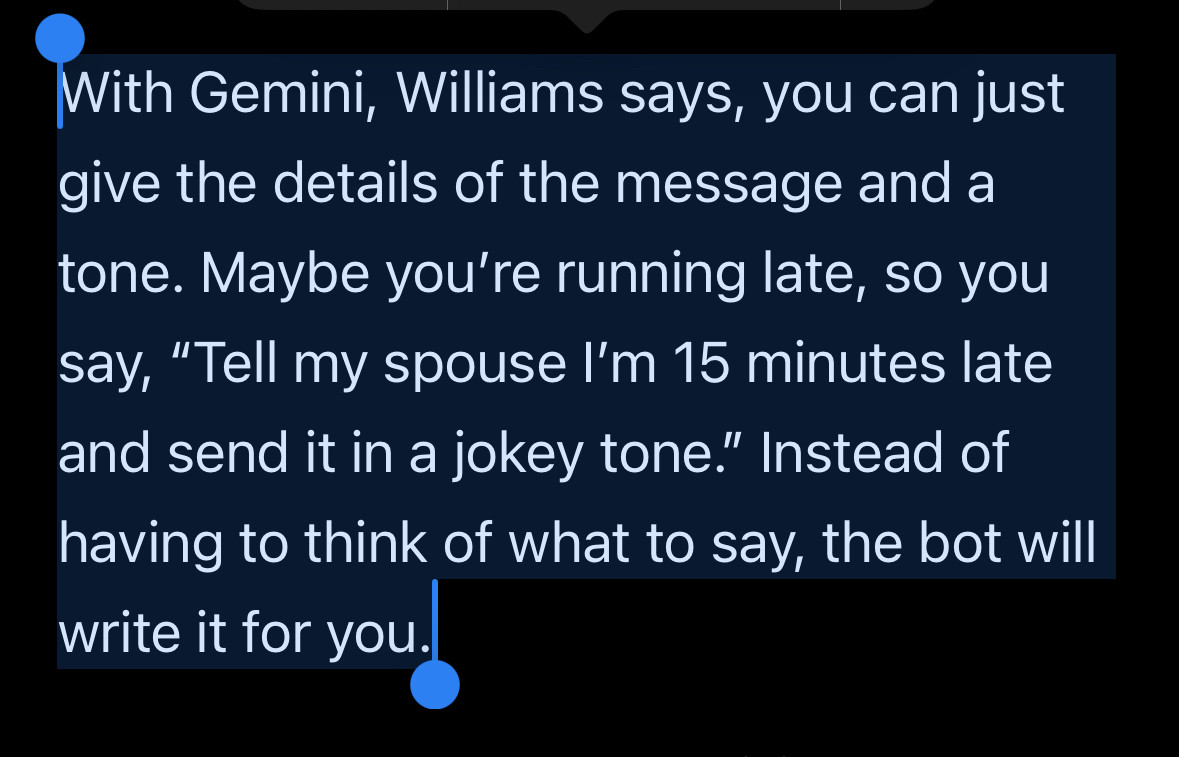
Today, humanistic labor like writing, drawing, and communication has been throughly feminized, both by its association with women and by its demonetization. Prompting AI to write, draw, or communicate allows people (men) to do those things in ways that position them not as doing women’s work, but as masters of a subordinate.

In the era of self-mastery vibes, AI functions in place of appropriated white femininity and non-whiteness to masculinize creativity, receptivity, and the general capacity to make and relate to art that the performance of hegemonic white masculinity otherwise prohibits. These bros may be through being cool, but they’re still want what they haven’t got and steal from other people to get it, or at least get what they think it is. In this way, AI compounds the initial enclosure represented for example by Morrison’s concept of Blacksound: all the IP the AI was trained on is full of stolen and appropriated content, and AI-generated writing, drawing, and communication redoubles that theft (if perhaps without the erstwhile ‘love’, to use Lott’s famous formulation). Prompting AI is a way for people to demonstrate their purported mastery over others, at least in the form of the AI agent, and this gender-washes matters of style and creativity and taste into terms acceptable for the Walsh and Augustine crowd. So, even though techbros and manosphere influencers have brought back Ancient Greek masculinity, they use contemporary tech to update cool’s libidinal and political economy into terms compatible with this new/old form of Puritanism about virility.
[…] In an earlier piece I argued that today’s right-wing masculinities use the performance of bad taste to demonstrate a virility undomesticated by anything so feminine as a sense of style, or worse, a wife. Aesthetic taste emerged in the enlightenment as a component of the white masculine objectivity and universality required to participate in civil society/the public sphere/etc. Exhibiting good taste demonstrated one’s alignment with the rational – and thus objective and universal – judgment that qualified you to do things like vote, serve on juries, or otherwise participate in the civic life of a citizen. And while the right is leaning into bad taste, personalization algorithms like TikTok’s “For You Page” have driven avant-garde internet cultures far away from anything like a monoculture or a commitment to shared norms and standards about what counts as “good” or “highbrow.” […]